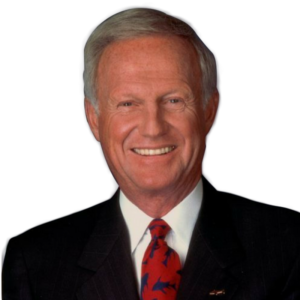

This time of year, I’m reminded of the dozens of commencement speeches I’ve delivered, always trying to inspire the graduating class with a tidbit or two that they can actually use as they move on to the next chapter of their lives.
My message always boils down to this: Your future is up to you. Your potential is unlimited. Now go prove it. Here’s a little jumpstart from some who’ve been there.
Playwright George Bernard Shaw was interviewed by a reporter shortly before his death. The reporter asked him, “Mr. Shaw, you have visited with some of the most famous people in the world. You’ve known royalty, world-renowned authors, artists, teachers and dignitaries. If you could be any person from history, who would you chose to be?”
Shaw’s reply was simple: “I would choose to be the man George Bernard Shaw could have been but never was.”
Don’t get caught in the trap of negativity – naysayers who say it can’t be done. In the 1940s, aeronautical engineers and physicists believed that no one could break the sound barrier. But Chuck Yeager, the famed pilot, believed it could be done and flew right through it. Now the Artemis II astronauts can’t wait to see where we’ll go next.
Leadership guru John C. Maxwell said: “Many intelligent adults are restrained in thoughts, actions and results. They never move further than the boundaries of their self-imposed limitation.”
Warning! The greatest limitations we ever face are the ones we place on ourselves by not staking claim to our potential.
That great philosopher of “Peanuts” fame, Charlie Brown observed, “The greatest burden in life is to have a great potential.”
And the creator of Charlie Brown and the rest of the “Peanuts” gang, Charles Schulz, explained, “Life is like a ten-speed bike. Most of us have gears we never use.”
What a waste of potential!
People have the potential to become infinitely more than they are now. Working up to one’s potential involves a blend of personal development and career growth.
Identify your strengths and weaknesses. Take time to understand your strengths and areas for improvement. Tools like SWOT analysis (Strengths, Weaknesses, Opportunities, Threats) can be helpful.
Create specific, measurable, achievable, relevant and time-bound goals for both personal and professional growth.
Invest in your education by taking courses, attending workshops or pursuing certifications related to your career and personal interests. Books, articles and journals can provide new insights and ideas. Never stop learning!
Build a support network by seeking mentors who can provide guidance and feedback. Connect with professionals and like-minded individuals who can support your growth.
Develop a growth mindset. View challenges as opportunities to learn rather than obstacles. Use constructive criticism to improve and grow.
Use tools like calendars and to-do lists to manage tasks effectively. Focus on activities that align with your goals and have the most impact.
Maintain work-life balance and ensure you have time for relaxation and personal interests. Regular exercise, healthy eating and leisure activities are essential for maintaining energy and focus.
Finally, take time to reflect on your progress and adjust your strategies as needed. Be open to change and adapt to new circumstances and be willing to pivot when necessary.
Unlocking your potential is a journey, not a destination. Embrace learning, build strong relationships and remain adaptable to achieving both personal and professional success.
Author Glenn Van Ekeren tells a story about when he was a young boy spending time on his grandparents’ farm. He was in the pasture one day when he and his grandfather came upon an electric fence – a single strand of wire that provides an electric shock when it comes in contact with livestock. His grandfather looked around, then placed his hand on the wire to step over it.
Glenn asked his grandfather why he looked around before stepping on the wire? And also, why have an electric fence if you don’t turn it on?
His grandpa smiled and said: “I was just looking to see if any cattle were watching me as I approached the fence. Electric fences don’t need to be left on all the time. Once cattle learn that they will be shocked, they will graze right up to the fence and stop.”
What limitations exist in your life that prevent you from attempting to go further and seek your potential? More importantly, what are you going to do about it?
Mackay’s Moral: The undeveloped piece of property with the greatest potential is still between the ears.